
Key Takeaways
- Recycling transforms used materials like paper, plastic, glass, and metal into new, valuable products.
- It reduces pollution by diverting waste from landfills and oceans.
- Recycling conserves natural resources such as trees, minerals, and fossil fuels.
- It saves energy compared to producing products from raw materials.
- Recycling supports the circular economy, promoting sustainability and waste reduction.
- The process helps lower greenhouse gas emissions and combat climate change.
- Recycling creates green jobs in collection, processing, and manufacturing sectors.
- Innovative technologies like AI sorting and chemical recycling improve recycling efficiency and quality.
- Public participation through proper sorting and awareness is essential for successful recycling programs.
- Supporting local recycling initiatives and choosing products made from recycled materials strengthen the recycling ecosystem.

What Is Recycling and Why It Matters
Recycling is not just about tossing a bottle into the blue bin-it’s a vital process that transforms used, discarded, or unwanted materials into valuable resources.
From aluminum cans and paper products to electronics and plastic containers, recycling gives new life to items that would otherwise end up in landfills or, worse, pollute our waterways and natural landscapes.
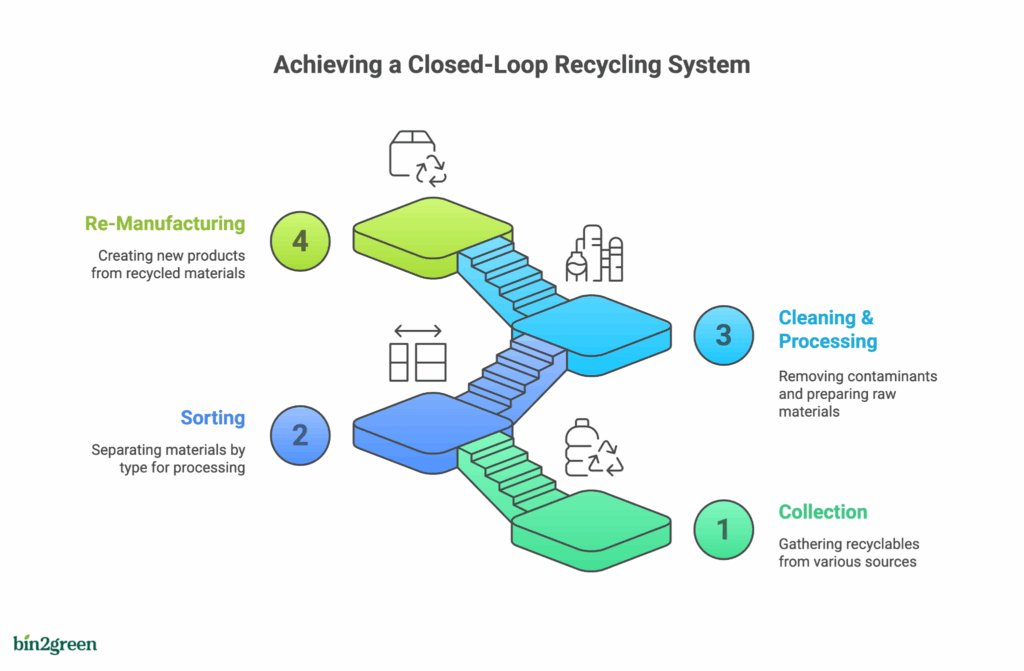
At its core, recycling involves four essential steps: collection, sorting, processing, and remanufacturing. These stages work together to ensure that recyclable materials are turned into usable raw materials for new products.
This closed-loop system reduces our reliance on virgin resources like timber, fossil fuels, and precious metals. The environmental benefits are massive fewer trees are cut down, mining activities are minimized, and we see a noticeable reduction in carbon emissions and energy consumption.
By recycling correctly, we help conserve natural resources, reduce waste, lower pollution levels, and support a circular economy where materials are continuously reused rather than discarded.
Simply put, recycling is one of the easiest and most impactful actions individuals and businesses can take to combat climate change and promote sustainability.
A Brief History of Recycling
Recycling isn’t just a modern invention-it’s a practice rooted deep in human history. Long before curbside bins and industrial recycling plants, ancient civilizations found ways to reuse valuable materials.
For example, metal scraps were often melted down and repurposed into new tools or weapons, while early paper makers in China and the Middle East reused old textiles and rags to make new sheets of paper.
These early methods laid the foundation for the recycling processes we know today.
Fast forward to the 20th century, and recycling began to take on a more structured role-especially during times of war. During World War I and World War II, resource shortages pushed governments to encourage citizens to collect and reuse items like rubber, metal, and paper.
Recycling wasn’t just a personal habit; it was a patriotic duty. Campaigns and school programs were launched to promote the reuse of materials, and entire communities came together to reduce waste and support the war effort.
In recent decades, recycling has evolved from a resource-saving necessity into a key part of global sustainability efforts.
As environmental awareness grew in the late 20th and early 21st centuries, governments and organizations began to introduce formal recycling programs to reduce landfill use and limit environmental damage.
Today, recycling is powered by both technological innovation and public concern over climate change, plastic pollution, and resource depletion. What started as a practical habit has become a vital global movement aimed at protecting the planet.
The Step-by-Step Recycling Process
Collection
Recycling begins with the collection of recyclable materials from homes, offices, businesses, and public spaces.
This can happen through curbside pickup programs, recycling bins, drop-off centers, or deposit-return systems. Proper collection ensures that recyclables are gathered separately from general waste, increasing the chances of successful processing.
Sorting
Once collected, the materials are delivered to a recycling facility where they’re sorted based on type-such as plastics, metals, glass, cardboard, and paper.
This sorting is essential because mixed materials can’t be recycled together. Sorting may be done manually or with the help of advanced technologies like conveyor belts, magnets, air classifiers, and even AI-powered robots.
Cleaning and Processing
After sorting, the recyclables are cleaned to remove any contaminants such as food residue, adhesives, or labels.
Clean materials are then broken down into raw forms: plastics are shredded into pellets, glass is crushed into cullet, metals are melted, and paper is pulped. These raw materials become the foundation for creating new products.
Re-Manufacturing
In the final stage, the cleaned and processed raw materials are used to manufacture new goods.
These can include anything from packaging, furniture, and building materials to electronics, clothing, or even new bottles and cans. This closed-loop process reduces the need for virgin resources, lowering the environmental footprint of manufacturing.
Types of Recycling
There are several types of recycling, each designed to handle specific materials:
- Paper Recycling: Old newspapers and boxes become new paper products.
- Glass Recycling: Bottles and jars are melted to make new glass.
- Plastic Recycling: Used plastics are turned into new containers or textiles.
- Metal Recycling: Aluminum and steel are remelted for reuse.
- Organic Recycling: Food scraps and yard waste are composted into nutrient-rich soil.
Benefits of Recycling
Recycling offers both environmental and economic advantages:
- Saves Energy: Recycling aluminum saves up to 95% of the energy compared to making it from scratch.
- Reduces Pollution: Fewer emissions and less waste in landfills.
- Conserves Resources: Less need to extract raw materials.
- Boosts the Economy: Creates jobs in the recycling and manufacturing sectors.
- Supports Sustainability: Encourages more responsible production and consumption patterns.
Recycling Challenges and Misconceptions
While recycling is a vital part of environmental sustainability, it’s not without its flaws and misunderstandings. One major challenge is contamination.
Many well-meaning people toss non-recyclable or dirty items into the recycling bin like greasy pizza boxes, plastic bags, or unwashed containers. These items can spoil entire batches of recyclables, causing them to be sent to the landfill instead.
This highlights the importance of cleaning recyclables and understanding what your local recycling program accepts.
Another common misconception is that anything marked “recyclable” will automatically be recycled. In reality, just because a product has the recycling symbol doesn’t mean your local facility has the capability to process it.
Items like certain plastics, multilayer packaging, or tinted glass are often too costly or complex to recycle.
Recycling also struggles with logistical and infrastructure issues. In some regions, especially in developing areas, there’s a lack of adequate systems for collecting, sorting, and processing recyclable materials.
Even in developed countries, recycling rates vary depending on local policies, access, and public awareness.
To overcome these challenges, we need stronger public education, better product labeling, and more investment in recycling technology and infrastructure.
By understanding what actually happens in the recycling process and where the gaps are, individuals and communities can make more informed, impactful choices.
Innovations in Recycling
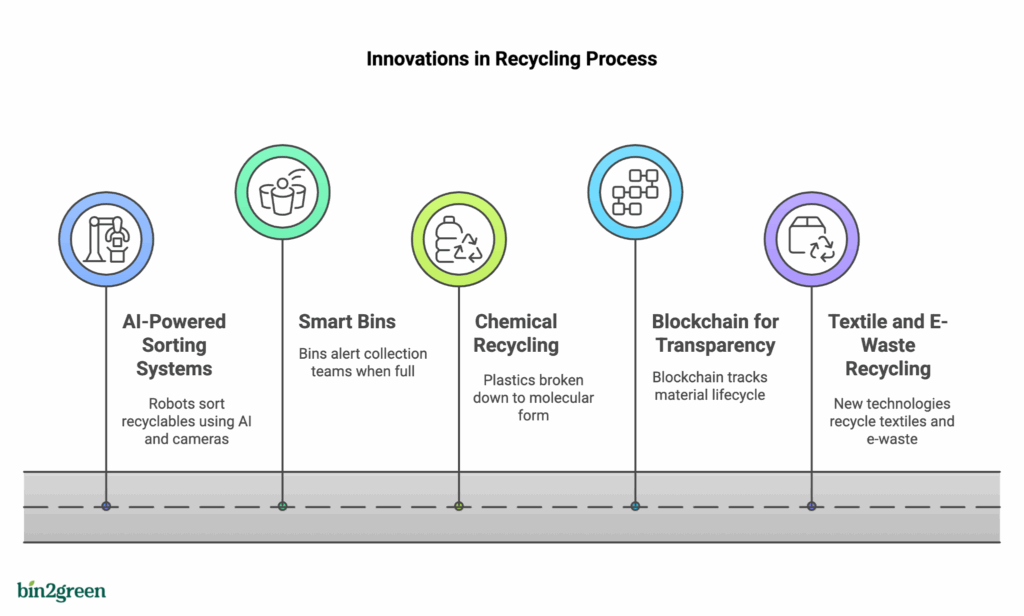
Recycling isn’t just about sorting cans and bottles anymore-technology is revolutionizing how we manage and repurpose waste. These innovations are making recycling faster, more efficient, and more sustainable:
- AI-Powered Sorting Systems
- Advanced robots equipped with artificial intelligence and high-resolution cameras can now sort recyclable materials at incredible speeds. These systems reduce contamination and improve the quality of recycled output, making the entire process more cost-effective.
- Smart Bins
- Smart waste bins use sensors to detect when they’re full and automatically alert collection teams. Some models can even pre-sort waste into recyclables and non-recyclables, improving collection efficiency and reducing overflow.
- Chemical Recycling
- Unlike traditional mechanical recycling, chemical recycling breaks plastics down to their original molecular form. This allows for more types of plastic to be recycled repeatedly without degrading the material quality-an exciting step toward a circular plastic economy.
- Blockchain for Transparency
- Blockchain technology is being used to track the entire lifecycle of recyclable materials. This creates a transparent and tamper-proof record, ensuring that materials labeled “recycled” are genuinely processed responsibly.
- Textile and E-Waste Recycling Advances
- With fashion and electronics generating massive waste, new technologies are emerging to recover valuable fibers and metals. These breakthroughs make it easier to recycle old clothing, smartphones, and other gadgets-industries that were traditionally hard to manage.
Recycling Around the World
Recycling isn’t a one size fits all process, it looks very different depending on where you are in the world. In countries like Sweden, recycling is deeply embedded in the culture and infrastructure.
In fact, Sweden recycles nearly 99% of its household waste, thanks to a highly efficient sorting system, strong government policies, and widespread public participation.
They’ve even gone so far as to import waste from other countries to keep their recycling and waste-to-energy plants running.
On the other hand, many developing countries face significant challenges when it comes to waste management.
Limited resources, lack of infrastructure, and low public awareness often lead to open dumping or burning of waste, both of which are harmful to the environment and public health.
In these regions, informal recycling sectors – individuals who collect and resell recyclable materials – play a crucial role, even though their work is often undervalued and unsupported.
Government involvement makes a big difference. Some nations have implemented strict regulations, financial incentives, or deposit return schemes to boost recycling rates.
Countries like Germany and South Korea, for example, have set up extensive systems that reward citizens for recycling correctly and penalize improper disposal. Meanwhile, other countries are still in the early stages of rolling out national recycling programs.
Sharing global best practices is essential for closing the recycling gap. By learning from countries with successful systems and adapting their methods to local contexts, more communities can build sustainable recycling infrastructures.
Encouraging international cooperation, funding innovation, and raising public awareness are all key to improving recycling efforts around the globe.
Why You Matter
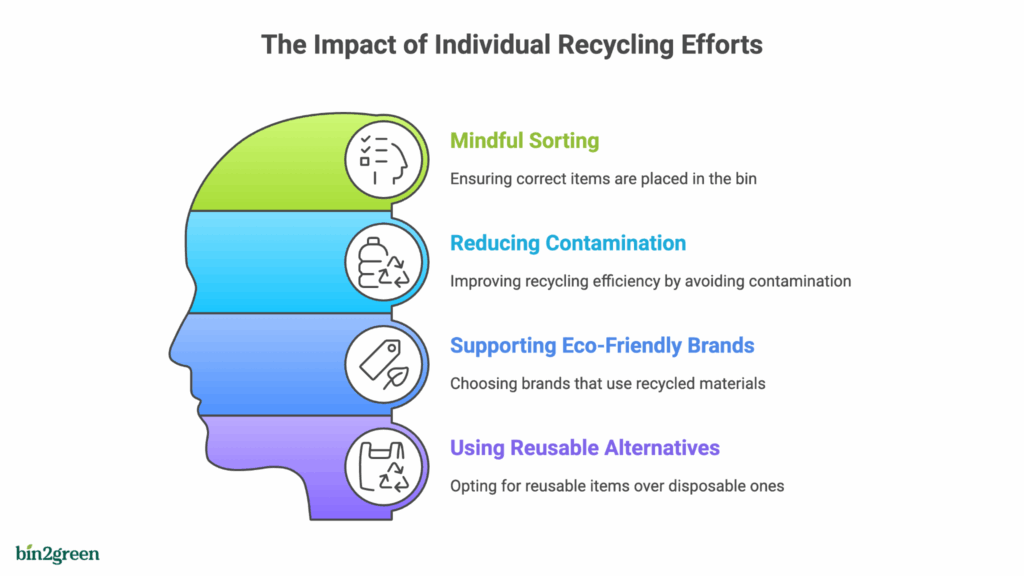
Recycling begins with small, everyday actions that each of us can take. One of the most important steps is being mindful of what you place in your recycling bin. Every item matters.
When you take a moment to check whether something is recyclable in your area, you’re helping to reduce contamination and improve the efficiency of the recycling process.
Simple habits can make a big difference. Rinsing containers before tossing them into the bin ensures they don’t spoil other recyclable materials.
Separating items correctly and avoiding wish cycling that is, putting non-recyclables in the bin in hopes they’ll be accepted-keeps recycling streams clean and usable.
Beyond your bin, you can make an even greater impact by supporting brands that use recycled or eco-friendly materials. Choosing reusable alternatives over disposable ones, like refillable bottles or cloth bags, helps reduce the demand for new raw materials.
When more people take these small but consistent steps, we build a stronger, more effective recycling system together.
Conclusion
Recycling is one of the most accessible and impactful ways individuals and communities can help protect the environment. Every item we choose to recycle – whether it’s a plastic bottle, a cardboard box, or an old electronic device.
These helps reduce the strain on landfills, conserve natural resources, and cut down greenhouse gas emissions. It’s a key part of moving toward a circular economy, where materials are kept in use for as long as possible instead of being discarded after a single use.
However, recycling alone isn’t enough. True sustainability requires a broader shift in mindset-embracing the reduce, reuse, recycle philosophy in our everyday lives.
That means minimizing consumption, rethinking packaging, choosing reusable items, and supporting brands that prioritize sustainable production. When combined, these actions create a powerful ripple effect that contributes to a cleaner planet and a more responsible future.
Whether you’re sorting your household waste correctly, staying informed about local recycling rules, or choosing products made from recycled materials, you’re making a difference.
Every small step counts and together, these steps build a more sustainable world for generations to come.
Frequently Asked Questions (FAQ)
What items can be recycled at home?
Generally, clean paper, cardboard, glass bottles, aluminum cans, and certain plastics (#1 and #2) can be recycled. Check your local guidelines to be sure.
Can plastic bags be recycled?
Most curbside programs don’t accept plastic bags because they tangle machinery. Many grocery stores offer dedicated drop-off bins instead.
Why is recycling important for climate change?
Recycling reduces the energy needed for production, which lowers carbon emissions and helps combat climate change.
Is recycling still worth it?
Yes. Although it’s not perfect, recycling saves energy, reduces pollution, and extends the life of materials, keeping them out of landfills
What happens if I put the wrong item in the recycling bin?
It can contaminate the entire batch, leading to the rejection of otherwise recyclable materials. When in doubt, leave it out or check your municipality’s guide.
What’s the difference between reuse and recycling?
Reusing means using an item again in its original form, while recycling involves breaking it down and transforming it into a new produc